Know your powder
IS YOUR
MATCHA REAL?
The ingredient list tells you more than the adjectives on the front.

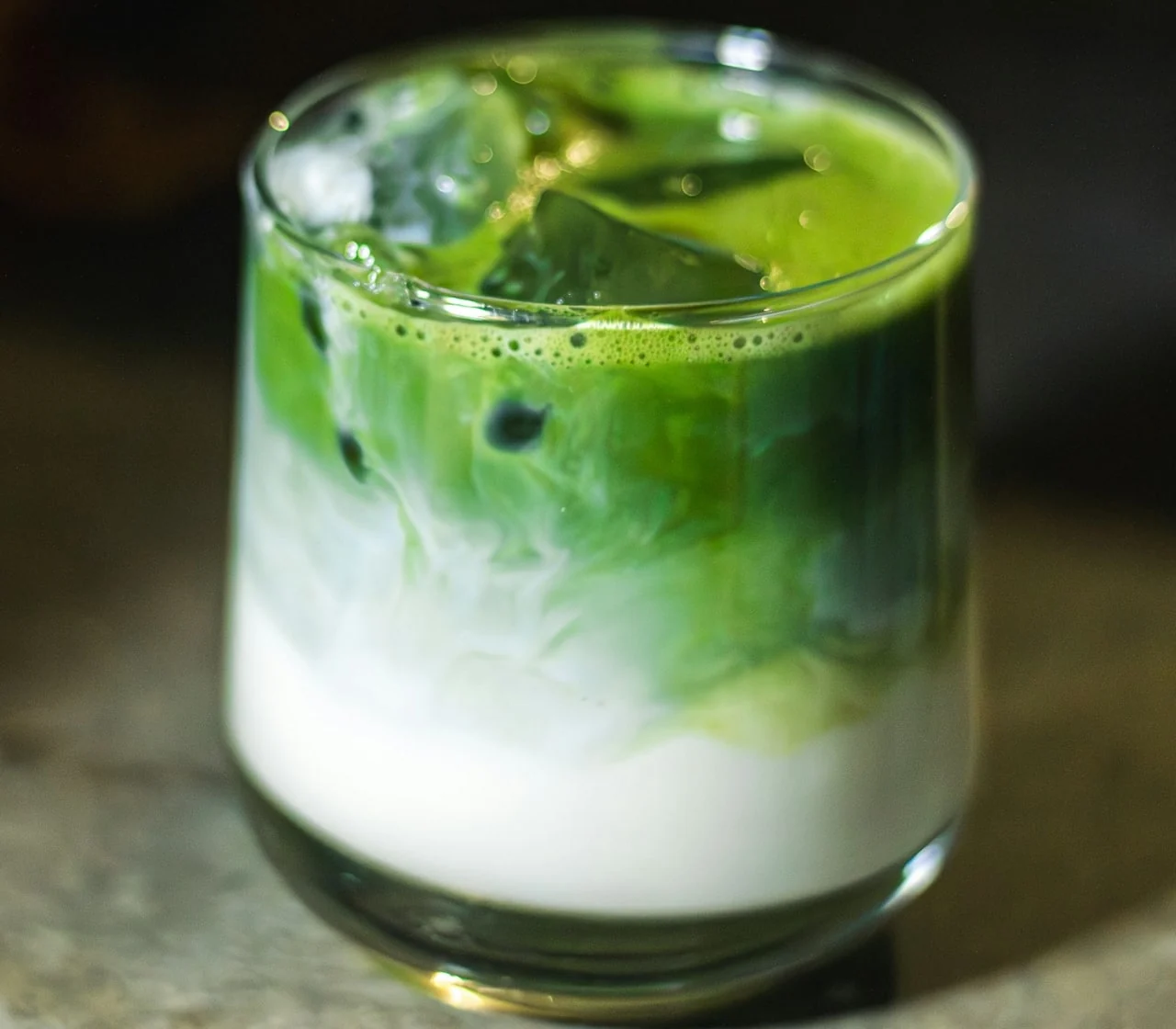
Nice tin. Very green photo. ‘Premium’ in three places.
I still want to know what’s in it.
If you’re wondering whether your matcha is real, start with the ingredients and where the tea comes from. Colour can help you ask a question. It can’t answer it for you.
First, what counts as matcha?
The Japan Matcha Association describes matcha as powdered tencha: tea leaves cultivated under shade, steamed, dried without rolling, then ground. Its explanation of the process gives you something more useful to ask about than the word ‘premium’.
Powdered green tea is a broader description. A seller should be able to explain what the tea is and how it was produced. A long story about Japanese culture doesn’t answer that product question.
Turn the pack around.
For a product sold as pure matcha, look for matcha as the only ingredient. A latte powder may also contain sugar, sweeteners, milk ingredients or flavourings. That makes it a blend. A clearly labelled blend can be exactly what you want for your drink.
In Australia and New Zealand, ingredients are generally listed in descending order of their ingoing weight. FSANZ explains how the list works. If sugar is first, it contributed more weight than any other single ingredient when the product was made. The list alone doesn’t tell you an exact percentage.
Read the whole list, including the ingredients inside a sweetener blend. The name on the front and the serving directions should make sense together.
Pure matcha: the tea powder itself.
Matcha latte blend: tea combined with other ingredients for a particular drink.
Choose the one you actually want. Compare it with the same type of product.
Ask where the tea came from.
Ask where the leaves were grown, where the powder was produced and who is selling it. ‘Packed in Australia’ answers a different question from where the tea was grown.
A named region and a clear producer or supplier explanation give you something to check. A warehouse address and a photograph of a tea field don’t establish that the tea came from that field.
You don’t need a beautiful origin story. You need the details for the product you’re buying. If a seller makes a specific origin or testing claim, ask for the information that supports it.
A green photo isn’t a test.
Lighting, editing and your screen all change the green you see. A photograph can show you the product’s appearance. It cannot verify the ingredient list or trace its supply chain.
Taste has limits too. A bitter cup doesn’t prove a powder is fake. Your amount of powder, water temperature and milk ratio can change the cup. Check the recipe before blaming the tin.
I’d be more interested in a seller answering a specific question than another badge saying the matcha is the best.
Five things to check before buying.
- Is it pure matcha or a latte blend?
- Can you read the complete ingredient list?
- Where were the tea leaves grown and the powder produced?
- Are the pack size, serving directions and storage instructions clear?
- Can the seller support the specific origin or testing claims it makes?
Those answers won’t replace independent testing. They will help you make a better purchase than judging a powder by its colour and a few expensive-sounding words.
For the basics, use our matcha powder guide. For our own blend, go straight to Japanese Matcha.
Sources & notes.
Sources checked 23 October 2026.
MEET JAPANESE MATCHA.
Matcha + monk fruit. Made for your iced latte.